


As part of the execution of the "Regional Public Good: Digital Health Transformation to Mitigate the Effects of COVID-19 in Latin America and the Caribbean" project, the "LACPass Connectathon" event was held in Santiago, Chile, between May 30 and June 1, 2022, in hybrid format, and was sponsored by the Pan American Health Organization (PAHO).
LACPass is a multi-country initiative under the framework of RACSEL (Latin American Network for Electronic Health Cooperation) and sponsored by the IDB (Inter-American Development Bank), which aims to build bridges toward health care for all people in the Latin America and Caribbean region. RACSEL is a collaborative network to advance regional digital transformation that follows the World Health Organization's guidelines for digital COVID-19 documentation and PAHO's strategic plans in the Americas, specifically the roadmap approved by the countries of the region in September 2021.
How did it develop?
During the two days of the technical event, activities were carried out that demonstrated it is currently feasible for different countries' information systems to access, exchange, integrate, and cooperatively use the data associated with COVID-19 certificates, through the use of and interaction with the LACPass regional directory services -which is based on the EU DCC definition- and the IHE (Integrating the Healthcare Enterprise) Gazelle testing platform.
What was achieved?
The LACPass Connectathon was a technical milestone for the participating countries of the Regional Public Good. The 8 countries that took part in the technical process were able to issue and validate COVID-19 certificates valid under the EU DCC (European Union Digital Covid Certificates) standard.
For the first time in the Latin America and Caribbean region, it was possible to carry out a proof of concept related to cross-border health interoperability. A common ground was established and a path was charted toward mutual technical understanding and the use of digital health standards.
In parallel with the technical event, the countries of the region met at the RACSEL General Assembly, where they agreed to strengthen the network, giving formal structure to the governance aspects of health interoperability in the region. During this session, the delegation of Colombia's Ministry of Health and Social Protection was designated to hold the presidency of RACSEL for the current term.
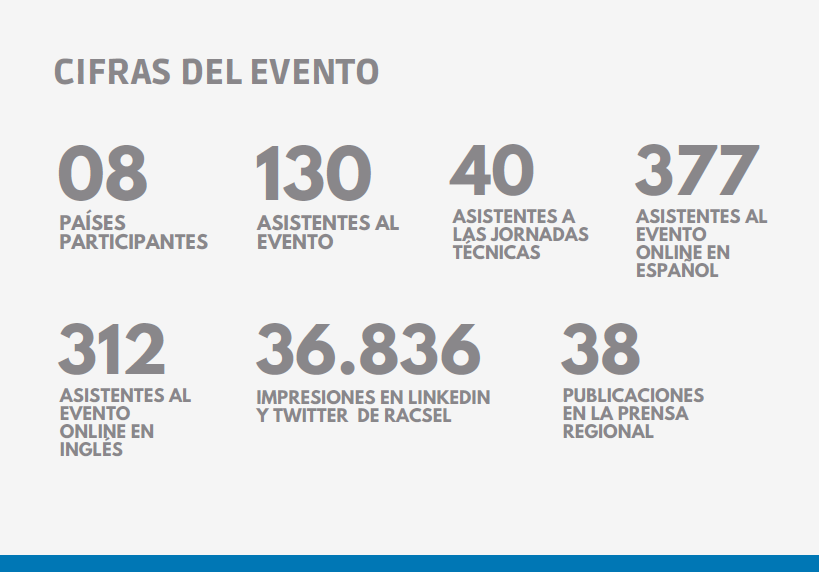


The participating countries carried out the following activities during the Connectathon:
- Create and issue COVID-19 certificates, according to the definition set by EU-DCC.
- Validate the certificates issued within the same country using the Gazelle platform.
- Verify, across countries, the COVID-19 certificates issued by the participants.
During the Connectathon, a total of 83 tests were carried out, yielding the following results:
- 83% of them were completed successfully, corresponding to a total of 68 tests.
- 10% could not be completed successfully, corresponding to a total of 8 tests.
- 7% of the tests failed, corresponding to a total of 7 tests.
The following 4 compliance levels were established for the technical tests:
Level 1 – Enablement: corresponds to correctly configuring the trust frameworks, and correctly uploading and downloading the public keys for the validation of COVID-19 certificates.
Level 2 – Issuance: corresponds to the correct generation and issuance of COVID-19 certificates from each of the participating systems.
Level 3 – Verification: corresponds to the correct verification, through the Gazelle platform, of the COVID-19 certificates issued by each of the participating countries.
Level 4 – Validation: corresponds to peer validation of the COVID-19 certificates issued by each country; this test case is repeated N times for each participant, who must validate against their peers.
The Event
The first edition of the LACPASS Connectathon was aimed exclusively at Ministries of Health, government agencies, or organizations related to Digital Health.